
The digital marketing world is going through one of its biggest shifts in decades. Third-party cookies — once the backbone of online advertising and cross-site tracking — are being phased out by Google.
But this change isn’t just technical. It affects how businesses collect data, optimize campaigns, and measure performance. If you rely on paid ads, analytics, or conversion tracking (especially in e-commerce), this directly impacts you.
Let’s break it down clearly.
Why Is Google Phasing Out Third-Party Cookies?
Google has announced the gradual removal of third-party cookies in its browser, Google Chrome, as part of a broader privacy initiative.
The core reasons:
1. Rising Privacy Concerns
Consumers today are more aware of how their data is collected and used. Third-party cookies track users across multiple websites — often without clear visibility or control. This created growing concerns about data misuse and transparency.
2. Regulatory Pressure
Global regulations like GDPR and other privacy laws require clearer consent and stricter data handling practices. Browsers are responding by limiting cross-site tracking.
3. Industry Shift Toward Privacy-First Advertising
Google is investing in its Privacy Sandbox, a framework designed to support advertising without exposing individual user behavior.
In simple terms:
The era of unrestricted cross-website tracking is ending.
The future is privacy-first, aggregated, and first-party driven.
What Does This Mean for You?
The impact differs depending on whether you’re a user or an advertiser.
For Everyday Internet Users
The Positives:
- Less cross-site tracking
- More privacy control
- Reduced invasive retargeting
The Trade-Off:
- Ads may become less personalized
- Some websites may lose advanced personalization features
- Free content models may evolve
You’ll likely see fewer “creepy” ads — but also potentially less relevant ones.
For Advertisers & Business Owners
This is where things get serious.
Third-party cookies were heavily used for:
- Cross-site behavior tracking
- Retargeting
- Audience building
- Attribution modeling
Without them, businesses face:
1. Reduced Behavioral Data
You lose visibility into how users move across different websites.
2. Weaker Retargeting Signals
Tracking users after several days (or across devices) becomes more difficult.
3. Attribution Gaps
Conversions happening days after ad clicks may no longer be attributed properly.
If you’re running Google Ads, Meta Ads, or tracking e-commerce purchases, this directly affects your ROI measurement.
Client-Side vs Server-Side Tracking (The Critical Difference)
To understand the solution, we need to understand tracking methods.
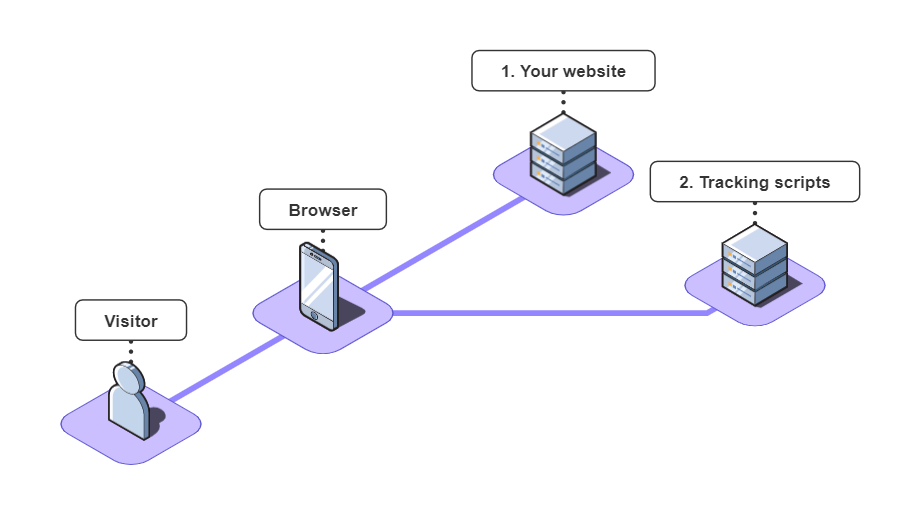
Client-Side Tracking
This is the traditional setup.
Tracking scripts (like pixels and tags) run inside the user’s browser.
Limitations:
- Blocked by ad blockers
- Limited by browser restrictions (Safari ITP, etc.)
- Cookies expire quickly (often 7 days)
- Vulnerable to data loss
If someone clicks your ad today but purchases 8 days later, you may lose that attribution.
Server-Side Tracking
Server-side tracking shifts data processing from the browser to your own server environment.
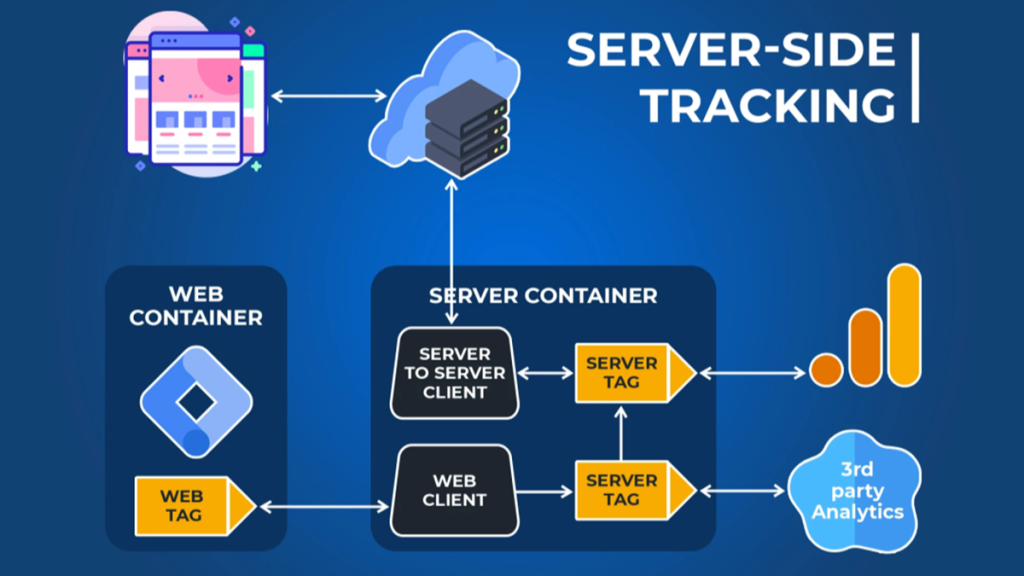
Instead of the browser sending data directly to multiple platforms, the data goes to your server first, where you control it.
Benefits:
- Bypasses many ad blockers
- Extends cookie lifespan (first-party cookies)
- Improves attribution accuracy
- Better data control
- Enhanced privacy compliance
- Faster page load (fewer browser scripts)
Most importantly:
It allows you to rely on first-party data instead of third-party cookies.
Why Server-Side Tracking Matters More After Cookie Phase-Out
As third-party cookies disappear, first-party data becomes your most valuable asset.
Server-side tracking enables:
✅ First-Party Cookie Ownership
Cookies are set via your own domain, not external platforms.
✅ User ID Tracking
You can store and recognize user identifiers across sessions and channels.
✅ Better Cross-Device Matching
When connected to CRM or login data.
✅ Stronger Attribution Windows
Not limited to browser-based expiration rules.
✅ Data Filtering & Control
You decide what gets sent to advertising platforms.
The Reality: Most Businesses Are Losing Conversions
Even today, many setups miss 15–35% of conversions due to:
- Ad blockers
- Safari ITP
- Payment gateways not redirecting properly
- Consent rejections
- Browser restrictions
- Cross-domain issues
As tracking restrictions increase, this gap grows.
If you’re running paid ads and optimizing budgets based on incomplete data, your algorithms are learning from inaccurate signals.
And when algorithms get poor data, performance drops.
Can You Achieve 100% Conversion Tracking?
With an advanced server-side setup combined with:
- CRM data synchronization
- Enhanced conversions
- Offline event imports
- First-party identifiers
- Proper event deduplication
It is possible to significantly close the data gap — in some cases approaching full conversion visibility across platforms like:
- Google Analytics 4
- Google Ads
- Meta Ads Manager
For e-commerce businesses especially, this can dramatically improve:
- ROAS
- Smart bidding efficiency
- Revenue attribution
- Campaign scaling
How to Get Started with Server-Side Tracking
Server-side implementation is more technical than traditional tracking.
It usually involves:
- Setting up a server container (often via Google Tag Manager)
- Hosting environment configuration
- First-party domain setup (CNAME)
- Platform integrations (GA4, Ads, Meta)
- Event validation & deduplication testing
If done incorrectly, it can still result in data loss — so setup quality matters.
Bottom Line
Google’s third-party cookie phase-out isn’t just a privacy update. It’s a fundamental shift in digital marketing infrastructure.
Businesses that adapt by:
- Investing in first-party data
- Implementing server-side tracking
- Connecting CRM with ad platforms
- Improving attribution models
Those who delay may see declining performance without understanding why.
The future of marketing isn’t about tracking more —
It’s about tracking smarter, cleaner, and with control.
If you run paid ads or an e-commerce store and want to maintain high tracking accuracy in this privacy-first era, server-side tracking is no longer optional — it’s essential.